Founded in 2009, Hoka Shoes changed the game for performance footwear. Instead of following the trend of thin, minimalist shoes, Hoka focused on maximum cushioning, curved midsoles, and unique designs. Co-founders Jean Luc Diard and Nicolas Mermoud aimed for shoes that handle downhill trails with ease.
Today, Hoka isn’t just for trail runners. Marathoners, nurses, and anyone needing all-day comfort love their soft cushioning and supportive designs.

But what form sets Hoka apart, and what materials and features have made it a billion-dollar brand? Read till the end to explore what’s inside these standout shoes.
Hoka’s signature cushioning comes from EVA foam, a lightweight, durable material that absorbs shock and offers a soft, responsive ride.
Hoka also uses Profly, a midsole foam compound, to make shoes more responsive. Profly has a soft top layer for comfort and a firmer bottom layer for better support. This is usually seen in models like the Mach, Tecton X, Rocket X, Torrent, Carbon X, and Mafate Series.
The uppers are made from mesh, leather, suede, and synthetic fabrics, providing flexibility, airflow, and durability for all-day comfort.
The outsoles are usually made from rubber for durability, with specialized designs for specific terrains, such as road running or trails. The rubber used in Hoka shoes is usually a combination of synthetic and natural rubber for enhanced cushioning.
Hoka shoes use TPU (thermoplastic polyurethane) overlays to support and stabilize the shoe. These overlays keep your foot in the right position, stopping it from rolling too much inward or outward and ensuring a secure fit.
Hoka shoes are designed with either an early-stage or late-stage rocker to promote a smooth, natural stride. Faster models, like race shoes, include an early-stage rocker for quick transitions, while training models use a late-stage rocker for more support and stability during longer runs.
Hoka’s J-Frame provides extra support in stability shoes like the Arahi by using firmer foam around the heel and midfoot. This firmer foam works alongside the regular cushioning foam in the midsole, creating a supportive wrap around your foot.
The H-frame technology adds support and stability to the shoe. It is seen in models like the Hoka Stinson 7 ATR and Gaviota. The H-frame uses firmer foam embedded within the midsole in a shape resembling an “H” or an “8.”
Step 1: Lace your shoes normally.
Step 2: Cross the laces from the bottom eyelet to the opposite side.
Step 3: Take each lace and thread it through the first set of laces, creating a loop.
Step 4: Pull the loops tight and thread them through the next laces, creating additional loops.
Step 5: Once tightened, tie a regular knot or bow to finish.
Best for Runners and active individuals who need extra heel security.
Step 1: Lace your shoes normally.
Step 2: Cross the outside lace to the opposite side in the midfoot area.
Step 3: Cross the inside lace to the outside and loop it through the eyelet.
Step 4: Tighten the laces for a snug fit.
Step 5: Repeat until you reach the top, then tie a knot or bow.
Best for People with high insteps who need extra space in the middle of their shoe.
Step 1: Thread the laces through the bottom eyelets.
Step 2: Skip one or two eyelets or lace them straight across.
Step 3: Lace alternately (left to right, right to left) until you reach the top.
Step 4: Tie the laces securely in a bow.
Best for: People with wide feet looking for a comfortable, more accommodating fit.
Hoka shoes are a favorite among runners, hikers, and anyone who needs reliable, high-performance footwear. These users demand top-quality shoes and a hassle-free experience because when you’re chasing a goal, you don’t have time to fumble with laces.
That’s where no-tie elastic shoelaces come in. These laces are designed to replace traditional laces, as they offer a snug fit, all-day comfort, and zero effort. They are one worry off your plate—perfect for anyone tired of tying Hokas daily.

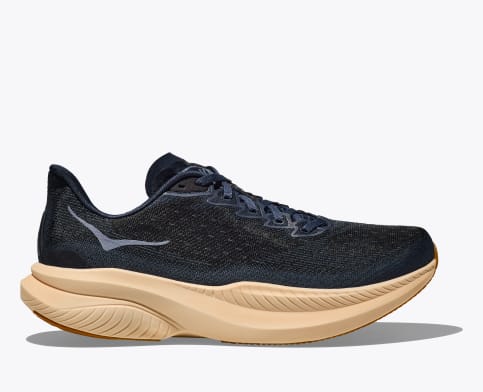
Outsole: Vibram Megagrip for superior traction on rugged terrain.
Lightweight: At 9.8 oz (278g), it is featherlight, much lighter than the average trail shoe, which weighs 0.3 oz (292g). Comfort: It keeps you agile and supported even on tough trails.
How does Hoka’s Meta-Rocker technology work?
The Meta-Rocker promotes a natural stride by seamlessly guiding your foot’s motion from heel to toe.
Are Hoka shoes good for wide feet?
Yes, Hoka offers wide-fit options to fit your feet comfortably.
Are no-tie elastic shoelaces good for Hoka shoes?
No-tie elastic shoelaces provide a snug, secure fit without requiring daily knotting, making them perfect for active users.


